











1951 – 2026
Esteban Garcia III entered into eternal rest on Sunday, May 24, 2026, at his residence in Encino, Texas, at the age of 74. He was born on December 30, 1951, in Mission, Texas, to Esteban Garcia Jr. and Laurentina Martinez Garcia.
Esteban was a true cattleman, rancher, and hunter whose family’s legacy in cattle ranching dated back to 1827, making him a proud fifth-generation cattleman. He had a deep respect for agriculture and strongly believed in preserving the land and maintaining wildlife habitats in their natural state. He was especially fascinated by Brahman cattle and Whitetail deer and found great peace in the outdoors, particularly loving Colorado.
A man of great strength, both physically and spiritually, Esteban was deeply devoted to his faith and to the family he loved so dearly. He was a loving and dedicated husband, an exceptional father, and an even more cherished grandfather. Known for his fairness, generosity, and willingness to help others, Esteban earned the respect and admiration of all who knew him. He also took great pride in caring for his home, enjoying landscaping and planting trees.
He is preceded in death by his parents.
Left to cherish his memory are his beloved wife, Oma Elisa Garcia of Encino; his sons, Esteban (Melissa) Garcia IV of Fort Collins, Colorado, Edwardo A. (Amanda) Garcia of San Isidro, Texas, and Enrique E. (Ashleigh) Garcia of Beeville, Texas; his brothers, Gerardo Luis (Elvira) Garcia of Encino and Carlos O. (Melissa) Garcia of McAllen, Texas; his sisters, Rebecca (Lee) Garcia of Dallas, Texas, Sylvia (Calixto) Hernandez of Mission, Texas, Victoria (Hank) Shoopman of Dripping Springs, Texas, and Elva (Jack) Pegram of Aransas Pass, Texas; and his four beloved grandchildren, who lovingly knew him as “Popo”, Emma Garcia, Edwardo Esteban Garcia, Ethan Joaquin Garcia, and Ellie Lauren Garcia, all of San Isidro. He also leaves behind numerous nieces, nephews, extended family members, and many dear friends.
Visitation will begin at 5:00 p.m. on Tuesday, June 2, 2026, at the Funeraria Del Angel Howard Williams in Falfurrias with a Rosary to be prayed at 6:00 p.m. Funeral Mass will be celebrated at 12:30 p.m. on Wednesday, June 3, 2026, at Sacred Heart Catholic Church in Falfurrias. Private Family Burial will be held at a later time.
Garcia Family Legacy
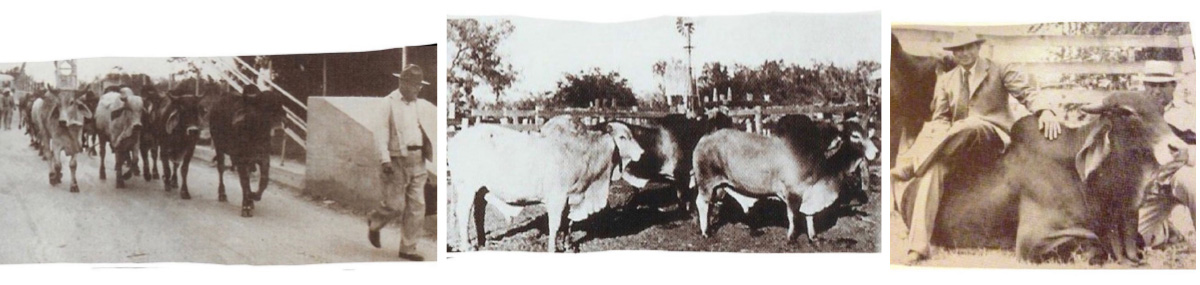
Esteban Garcia: Pioneer Rancher and Advocate for Mexican Americans
Garcia, Esteban (1896–1988).Esteban Garcia, South Texas rancher and cattle breeder, was born on December 2, 1896, in Camargo, Tamaulipas, Mexico, the eldest of thirteen children of Amancio Garcia and Braulia de la Garza. The Garcia family had received an original land grant from the King of Spain in 1740. The sizable grant at one time included more than a quarter million acres on both sides of the Rio Grande. In 1827 Garcia’s grandfather, Eligio Garcia, took over the active ranch management in a large portion of the area that is now Starr and Brooks counties. Esteban Garcia had little formal education, as he quit school in the sixth grade when his father became very ill. In 1913, when Esteban was seventeen, his father moved the family to the Artecitas Ranch on the banks of the Rio Grande. (The Artecitas Ranch was part of the original land holdings located near what is now La Grulla in Starr County.) Esteban Garcia married Maria Salome Izaguirre (also of Camargo, Mexico) in 1920; they had six children. At his father’s death in 1923, Esteban took over management of the ranch. He actively supported the movement against Gen. Venustiano Carranza and helped provide munitions, weapons, and food to the anti-Carranzistas.
Over the years Garcia lost a large amount of land to back taxes and debts inherited from his father; he not only worked Tacubaya, the family ranch in Brooks County, but also worked as a hired hand for other ranchers to support his family. With his love for ranching and his work ethic, he gained the respect and support of a number of influential Anglo ranchers. In 1931 Richard Kleberg from the King Ranch asked Garcia for his support in his bid for Congress. At that time in Brooks County, part of the district Kleberg would represent, Mexican Americans were not allowed to dance in public. Garcia agreed to support Kleberg and suggested that if the Brooks County situation changed, it would make his job of gathering support for him easier. On election day Mexican Americans in Brooks County celebrated Kleberg’s victory by dancing in the streets.
In the early 1930s vast amounts of natural gas and oil were discovered in South Texas. Standard Oil of Texas (now Exxon Corporation) approached Garcia to lease his land for exploration. By this time Garcia had become the largest Hispanic rancher in South Texas and was looked upon as the spokesman for many smaller ranch operations. When Standard Oil came to him with their offer, he refused to sign any agreement that would not include a royalty payment system. Standard offered to increase the bonus money, but Garcia refused and further indicated that unless they came to an understanding, Standard Oil would not be signing any of the smaller ranchers in the area, either. With his influence, area ranchers held together and eventually gained not only the signing bonus but also fixed royalties on any producing well on their property.
In 1935 Garcia moved his family from Tacubaya to McAllen because he wanted his children to receive a good education. In McAllen his eldest daughter, Alicia, and later his son, Esteban, Jr., were denied admittance into the public swimming pool because of their race. Garcia called several influential Anglo friends and politicians, demanding an explanation. He even suggested a commercial boycott by Mexican Americans if something was not done. Within weeks after his confrontation, the McAllen pool was desegregated.
In 1932 Esteban, in partnership with his brother Eligio, had begun acquiring domestic and Mexican Brahman cattle, and by 1940 their herd was considered superior in the United States. In 1946 Esteban and Eligio obtained thirteen Zebu, or Bos indicus, Brahman cattle from Brazil; these were eventually recognized by the American Brahman Breeders Association and became a registered breed. As a consequence of his difficulty in registering the new breed, Garcia helped found the Pan American Zebu Association (now the International Zebu Breeders Association), which helps keep records on the development of the breed.
Also in 1946, foot-and-mouth disease broke out in Mexico and began spreading toward the United States. A group of Mexican ranchers approached Garcia to ask for technical assistance from the United States. He directed their request to the Texas and Southwestern Cattle Raisers Association in San Antonio. It took their request to Washington, D.C., and in 1947 presidents Harry Truman and Miguel Aleman signed an agreement that paved the way for a joint United States-Mexico campaign to stop the spread of foot-and-mouth disease.
During the 1950s Garcia was instrumental in helping the Westinghouse Corporation secure an $18 million contract from the Mexican government to construct a series of canals from Lake Marte Gomez to Reynosa. Not only did this irrigation project stimulate the local economies on both sides of the border, it also opened up thousands of acres of new land for ranching and farming in Mexico. Garcia also was able to get approval from the Secretary of Interior to extend electrical power from Rio Grande City to his native hometown of Camargo. In 1952 Garcia married Maria Elizondo, also from Camargo. He died on February 7, 1988, in Rio Grande City.
This excerpt is from the Handbook of Texas, https://www.tshaonline.org/handbook/entries/garcia-esteban, Published October 1, 1995.