







What You Need to Know
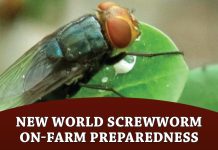
What is New World Screwworm?
■ New World screwworm (NWS) infestation occurs when NWS fly larvae (Cochliomyia hominivorax) infest the tissue or flesh of warm-blooded animals; on rare occasions this includes people.1
■ Screwworm flies are attracted to and lay eggs on and in open wounds.1
■ In 2023, NWS detections in Panama exploded from an average of 25 cases per year to more than 6,500 cases in 1 year. Since then, screwworm has been detected in Costa Rica, Nicaragua, Honduras, Guatemala, Belize, El Salvador and Mexico, north of the biological barrier that’s successfully contained this pest to South America for decades.2 In June of 2026, it was confirmed in the U.S.11
How it spreads
■ New World screwworm infestations begin when a female fly lays eggs on open wounds or other parts of the body in live, warm-blooded animals. In rare occasions, this can happen in birds and people. The smell of a wound or an opening such as the nose, mouth or eyes, umbilical cord of a newborn animal or genitals, will attract the female flies. Wounds as small as a tick
bite may attract a female fly to feed and lay her eggs. One female can lay 200 – 300 eggs at a time and may lay up to 3,000 eggs during her 10- to 30-day lifespan.3
■ Eggs hatch into larvae (maggots) that burrow into the wound to feed on
What is being done to control the spread
The Animal and Plant Health Inspection Service (APHIS) is partnering with other USDA agencies, the U.S. Department of State, the Food and Agriculture Organization of the United Nations and affected countries to respond to the outbreak. APHIS is investing to combat new NWS detections in Central America and Mexico as well as eradication efforts in the U.S. With this funding, APHIS aims to eradicate NWS in Central America and Mexico and re-establish the biological barrier in the Darien Province. The APHIS strategy to eradicate NWS in previously pestfree areas and re-establish the biological border in the Darien is rooted in three pillars known to be effective in combating this pest:4
1. Use of sterile insect technique
2. Development and enforcement of animal movement controls
3. Increasing passive and active surveillance, outreach and education in impacted areas4 APHIS maintains the only NWS pupae sterilization facility in North America. The facility is managed and funded jointly by USDA and Panama’s Ministry of Agriculture Development (MIDA) through COPEG.
Located in Pacora, Panama, COPEG produces, sterilizes and releases NWS in the region. The COPEG facility produces and disperses approximately 100 million sterile flies per week. On Feb. 26, 2025, APHIS announced that it is shifting sterile fly dispersal efforts to Mexico—the northernmost point of the current outbreak. As they transition to these sites, they will continue operations using dispersal centers outside of Mexico to ensure program continuity. APHIS remains committed to working closely with regional partners to support on-theground outbreak response activities, including surveillance, animal health outreach and early detection efforts.4
Consumer impact
NWS myiasis is not a food safety concern.12 The United States Department of Agriculture’s Food Safety and Inspection Service (FSIS) is the regulatory agency responsible for ensuring that the nation’s commercial supply of meat, poultry and egg products is safe and properly labeled. Under the Federal Meat Inspection Act (FMIA), FSIS inspection personnel are required to conduct inspection of all amenable species that are not otherwise exempt or State inspected. Any evidence of screwworm infection would be identified during these inspection processes, and adulterated product derived from the affected animal would not be allowed to go into commerce. All imported meat and poultry products must first meet U.S. Customs and Border Patrol (CBP) and APHIS animal health requirements, and are subsequently reinspected at a federally inspected facility prior to entry into U.S. commerce.5
Economic impact
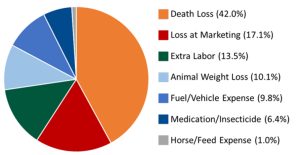
During the 20th century, the presence of NWS cost the U.S. livestock industry more than $100 million annually.6 An economic analysis of the 1976 NWS ou
tbreak in Texas, adjusting for inflation in 2024, indicated that an outbreak roughly the scale of the 1976 outbreak could cost Texas producers $732 million per year and the Texas economy a loss of $1.8 billion if it were to happen today.7
New World Screwworm and humans
Symptoms
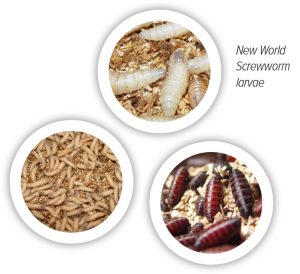 ■ NWS infestations are very painful. If you have an NWS infestation, you may see maggots (larvae) around or in an open wound. They could also be in your nose, eyes or mouth.
■ Symptoms can also
include:
• Unexplained skin lesions (wounds or sores) that do not heal
• Skin wounds or sores that worsen over time
• Painful skin wounds or sores
• Bleeding from open sores
• Feeling larvae movement within a skin wound or sore, nose, mouth or eyes
• Seeing maggots around or in open sores
• A foul-smelling odor from the site of the infestation
■ Secondary bacterial infections sometimes occur and may cause fever or chills.
Prevention
■ Prevention is key to protecting yourself from myiasis. Prevent insect bites, especially when visiting tropical areas and spending time outdoors.
■ Keep open wounds clean and covered.
■ Wear loose-fitting, long-sleeved shirts and pants, and socks to limit areas where you could get bitten.
■ Use an EPA-registered insect repellent.
■ Treat clothing and gear with products containing 0.5% permethrin.
■ Sleep indoors or in rooms with screens.
New World Screwworm and pets
■ The animals most affected by NWS include cattle, canines, pigs and horses. Although it mainly affects livestock, it can also affect companion and wild animals.8
■ If you suspect your pet has NWS, you should contact your veterinarian immediately.
Dogs
• Any dog that may have NWS needs to receive veterinary care immediately.
• Dogs confirmed to be affected with screwworm myiasis must undergo effective treatment along with treatment of the surrounding premises.8
• All visible eggs and larvae must be removed from in and around the wound and disposed of.
• The wound should then be thoroughly cleaned and disinfected.
• Depending on severity, the animal may need extensive wound care, systemic antimicrobials and analgesia.
• The dog must be re-inspected by the examining veterinarian 24 hours after administration of appropriate treatment to confirm no live larvae remain in the wound. If live larvae are found, the additional larvae should be removed as outlined above with continued monitoring of the wound. Additional treatment may be necessary.
• The dog may be released from isolation after it is confirmed that no screwworm larvae remain, and the dog is determined by the official veterinarian (SAHO, CDC Veterinary Medical Officer or APHIS VS Veterinary Medical Officer) to be free of screwworm.9
Horses
Clinical signs of NWS include:10
• Open wound
• Evidence of pain
• Irritation
• Head Shaking
• Presence of maggots in wounds
• Foul odor
■ Animals infested with NWS should be treated according to the recommendations of their veterinarian and state and federal animal health officials.10
• Typically, cleaning of wound and surgical removal of maggots is needed with subsequent treatment with approved topical and systemic insecticides.10
• Larvae removed from the wound must be destroyed as directed by federal or state animal health officials and not allowed to enter into the environment.10
• Systemic administration of antibiotics is recommended if the wound becomes infected. Treatment of the environment may also be necessary.10
■ In order to prevent NWS, it is important to regularly inspect of wounds, use insect repellents and maintain clean environments.10
■ Anyone suspecting a screwworm infection should contact their state veterinarian immediately.10
Sources:
1. https://www.cdc.gov/myiasis/about-new-world-screwworm-myiasis/index.html
2. https://www.aphis.usda.gov/livestock-poultry-disease/cattle/ticks/screwworm/outbreak-central-america
3. https://www.cdc.gov/myiasis/about-new-world-screwworm-myiasis/index.html
4. https://www.aphis.usda.gov/sites/default/files/nws-historical-economic-impact.pdf
5. https://tscra.org/wp-content/uploads/2024/11/EMGuide-NewWorldScrewworm.pdf
6. https://www.aphis.usda.gov/sites/default/files/bro-new-world-screwworm.pdf
7. https://www.aphis.usda.gov/sites/default/files/nws-historical-economic-impact.pdf
8. https://www.aphis.usda.gov/sites/default/files/sop-detection-of-nws-in-dogs.pdf
9. https://rr-americas.woah.org/en/news/frequently-asked-questions-about-new-world-screwworm/
10. https://www.equinediseasecc.org/new-world-screwworm
11. https://www.aphis.usda.gov/animals/animal-health/livestock-and-poultry-disease/stop-screwworm
12. www.aphis.usda.gov/sites/default/files/nws-response-playbook.pdf. Accessed 4/22/26.